Loading...

SecurityPlace is a free online resource. We may receive compensation when you click provider links or call partner numbers. Compensation may affect how and where providers appear.
Learn more.Loading...

.svg?auto=webp&quality=85&width=1400)
A home security system is a combination of electronic devices designed to detect, alert, and respond to potential threats like break-ins, fires, or water leaks. Most systems use a control panel or smart hub to connect sensors, cameras, and alarms throughout your home.
There are two main types of security systems:
Regardless of the setup, the goal is the same, helping you prevent loss, protect your family, and feel secure whether you’re home or away.

This is the system’s central brain. It connects all devices, communicates with monitoring centers, and allows you to arm or disarm your system.
Placed on doors and windows, these sensors trigger an alert when opened unexpectedly.
Motion detectors monitor movement within a room and are especially useful for hallways or main living areas.
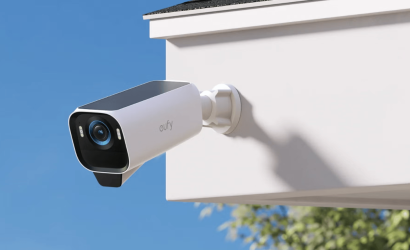
Indoor and outdoor cameras record video, stream live footage, and can identify unusual activity. Many now offer motion-triggered recording and app access.
A loud siren alerts you (and often scares off intruders) when a break-in is detected.
Your smartphone acts as a remote control for your system. You can view footage, arm or disarm the system, and receive alerts instantly.


.svg?auto=webp&quality=90&width=50)


.svg?auto=webp&quality=85&width=600)


For more detail on the difference between monitored and self-monitored systems, see our guide to Monitored vs. Unmonitored Security Systems.
Today’s security systems go beyond alarms—they connect your home in smarter ways. Many systems work with Alexa, Google Assistant, or Apple HomeKit, allowing you to control devices with voice commands.
.svg?auto=webp&quality=85&width=1200)
These automations save energy and enhance convenience while keeping your home secure.
Because modern security systems rely on cloud storage and Wi-Fi connections, data protection is essential. Leading providers like ADT, SimpliSafe, and Vivint use encryption, two-factor authentication, and secure cloud servers to keep your data private.
Always check a provider’s privacy policy before purchasing. Look for brands that clearly explain how footage is stored, whether third parties have access, and how long data is retained.
_2.svg?auto=webp&quality=85&width=1200)
These automations save energy and enhance convenience while keeping your home secure.
Because modern security systems rely on cloud storage and Wi-Fi connections, data protection is essential. Leading providers like ADT, SimpliSafe, and Vivint use encryption, two-factor authentication, and secure cloud servers to keep your data private.
Always check a provider’s privacy policy before purchasing. Look for brands that clearly explain how footage is stored, whether third parties have access, and how long data is retained.
.svg?auto=webp&quality=85&width=1200)
| Pros | Cons |
|---|---|
• Aliquam at ex finibus, luctus arcu quis, suscipit leo. | • At ex finibus, luctus arcu quis, suscipit leo. Vivamus |
• Aliquam at ex finibus, luctus arcu quis, suscipit leo. | • At ex finibus, luctus arcu quis, suscipit leo. Vivamus |
• Aliquam at ex finibus, luctus arcu quis, suscipit leo. | • At ex finibus, luctus arcu quis, suscipit leo. Vivamus |
For most homeowners, a home security system is worth the investment. It protects your home from break-ins, alerts you to fire or carbon monoxide risks, and often qualifies you for homeowner insurance discounts.
Beyond financial protection, the biggest benefit is peace of mind. Whether you’re home or away, knowing your family and belongings are protected brings a sense of control that’s hard to put a price on.
Even a basic system is a major improvement over having no security at all. With entry-level packages now available for under $300, there’s an option for every budget.
Home security systems combine sensors, cameras, and monitoring technology to detect and respond to threats in real time. Professionally monitored systems offer 24/7 support and faster emergency dispatch, while DIY options give you flexibility and control at a lower cost.
If you’re new to home security, start by identifying what matters most—budget, convenience, or full-service monitoring—and explore systems that match those priorities. To find your ideal setup, visit our guide to the Best Home Security Systems of 2026.
ADT systems work with Alexa, Google Assistant, and Z-Wave devices, making it relatively easy to link your security setup with lights, locks, or thermostats. The integrations perform well for basic automations, but customization options are more limited than with brands like Vivint or Ring that build around open smart home ecosystems.
.svg?auto=webp&quality=90&width=50) Get Offer
Get Offer.svg?auto=webp&quality=90&width=50)